#include <transport.hpp>
◆ Transport() [1/3]
| conduit::Transport::Transport |
( |
| ) |
|
|
default |
◆ Transport() [2/3]
| conduit::Transport::Transport |
( |
const Transport & |
| ) |
|
|
delete |
◆ Transport() [3/3]
| conduit::Transport::Transport |
( |
Transport && |
| ) |
|
|
defaultnoexcept |
◆ ~Transport()
| conduit::Transport::~Transport |
( |
| ) |
|
|
overridedefault |
◆ attach()
| void conduit::Transport::attach |
( |
Bus & |
bus | ) |
|
|
inlinevirtual |
Attach to a bus.
The base implementation builds an inbound sink that forwards to bus.deliver_to_listeners and delegates to attach_with_sink. Subclasses that need to do per-attach work (open connections, subscribe to topics) should override attach_with_sink.
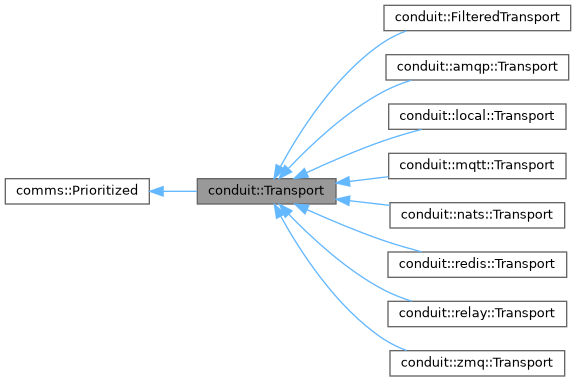
Reimplemented in conduit::FilteredTransport.
◆ attach_with_sink()
| virtual void conduit::Transport::attach_with_sink |
( |
Bus & |
bus, |
|
|
InboundSink |
sink |
|
) |
| |
|
inlinevirtual |
◆ bus()
| Bus * conduit::Transport::bus |
( |
| ) |
const |
|
inlineprotectednoexcept |
◆ deliver_inbound()
Subclasses call this for inbound delivery instead of touching the bus directly.
The sink installed at attach time decides what happens next.
◆ detach()
| virtual void conduit::Transport::detach |
( |
| ) |
|
|
inlinevirtualnoexcept |
◆ dispatch()
◆ flush()
| virtual void conduit::Transport::flush |
( |
| ) |
|
|
inlinevirtual |
◆ operator=() [1/2]
◆ operator=() [2/2]
◆ scope()
The documentation for this class was generated from the following files: